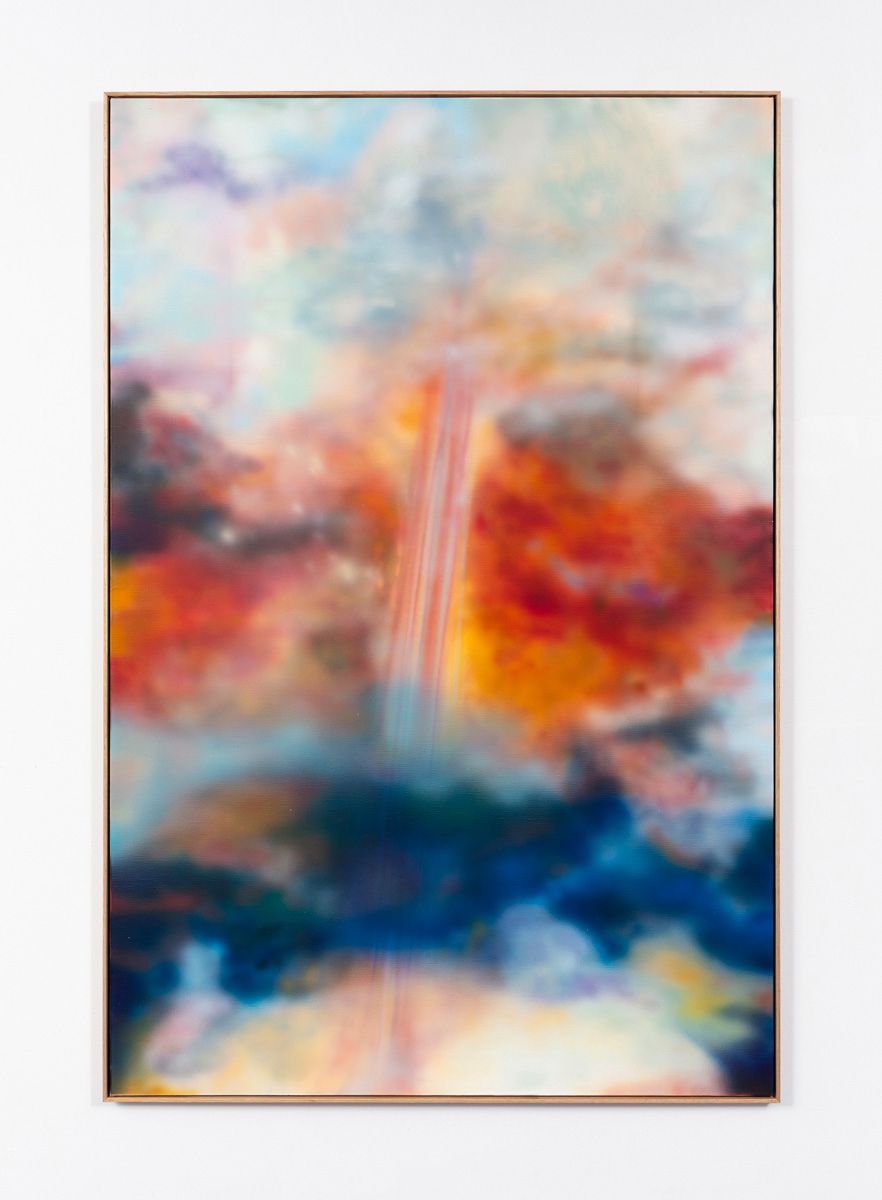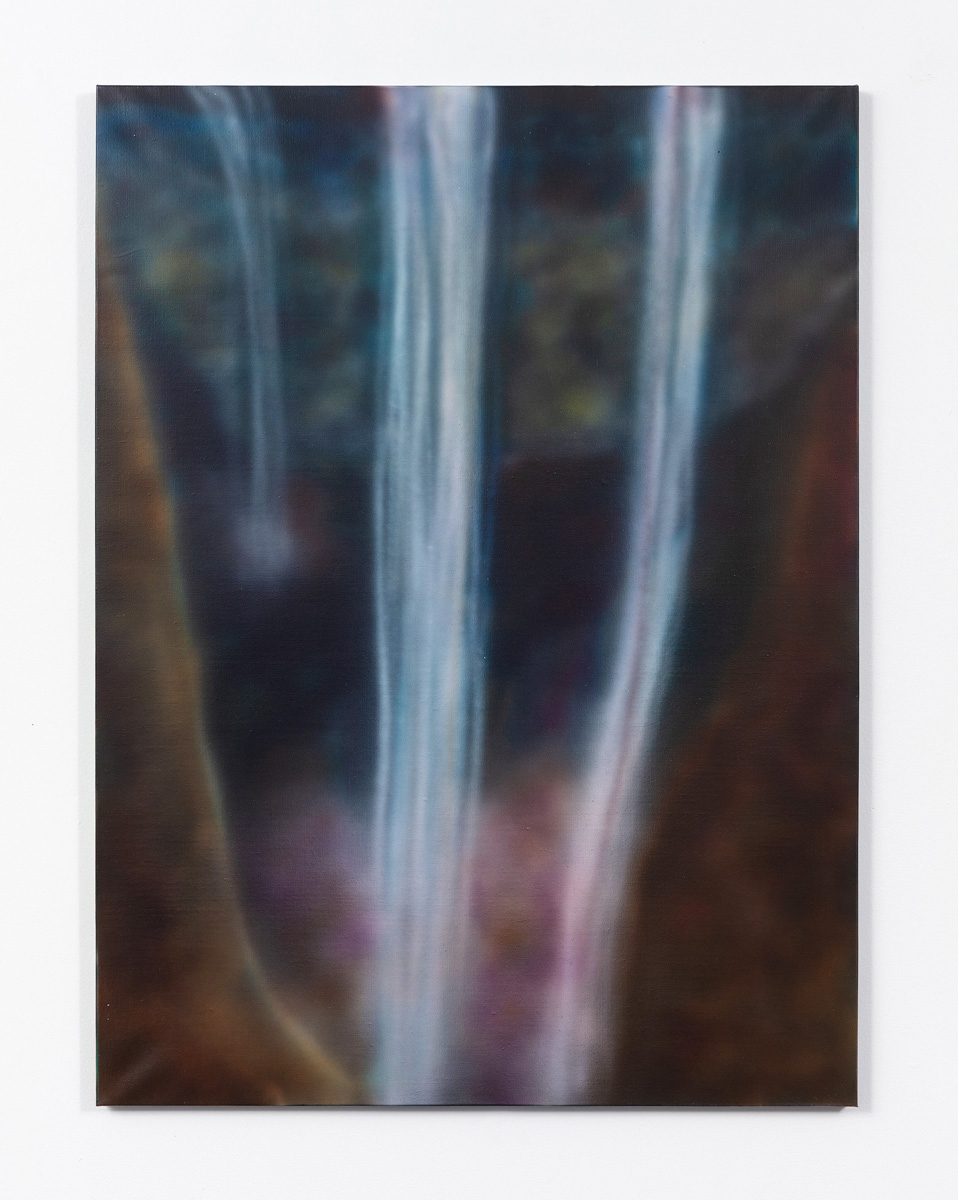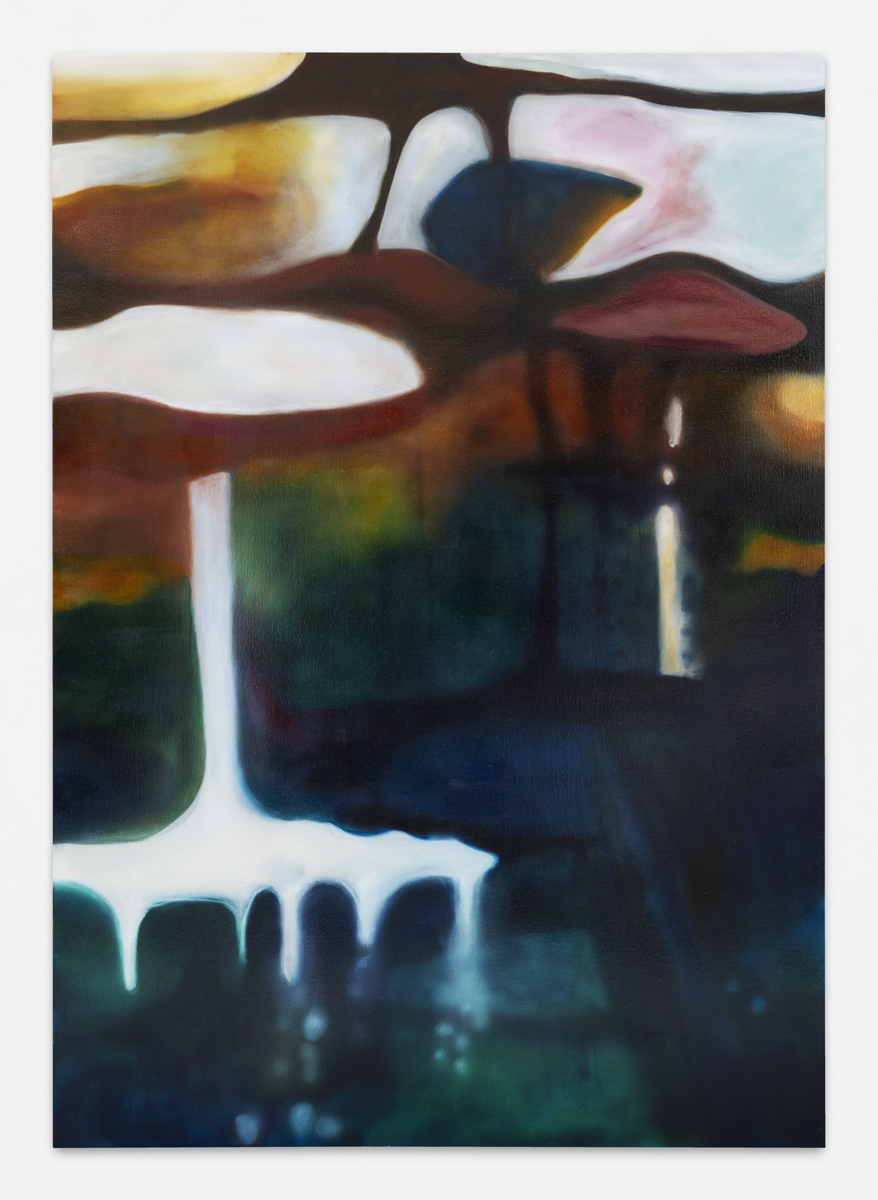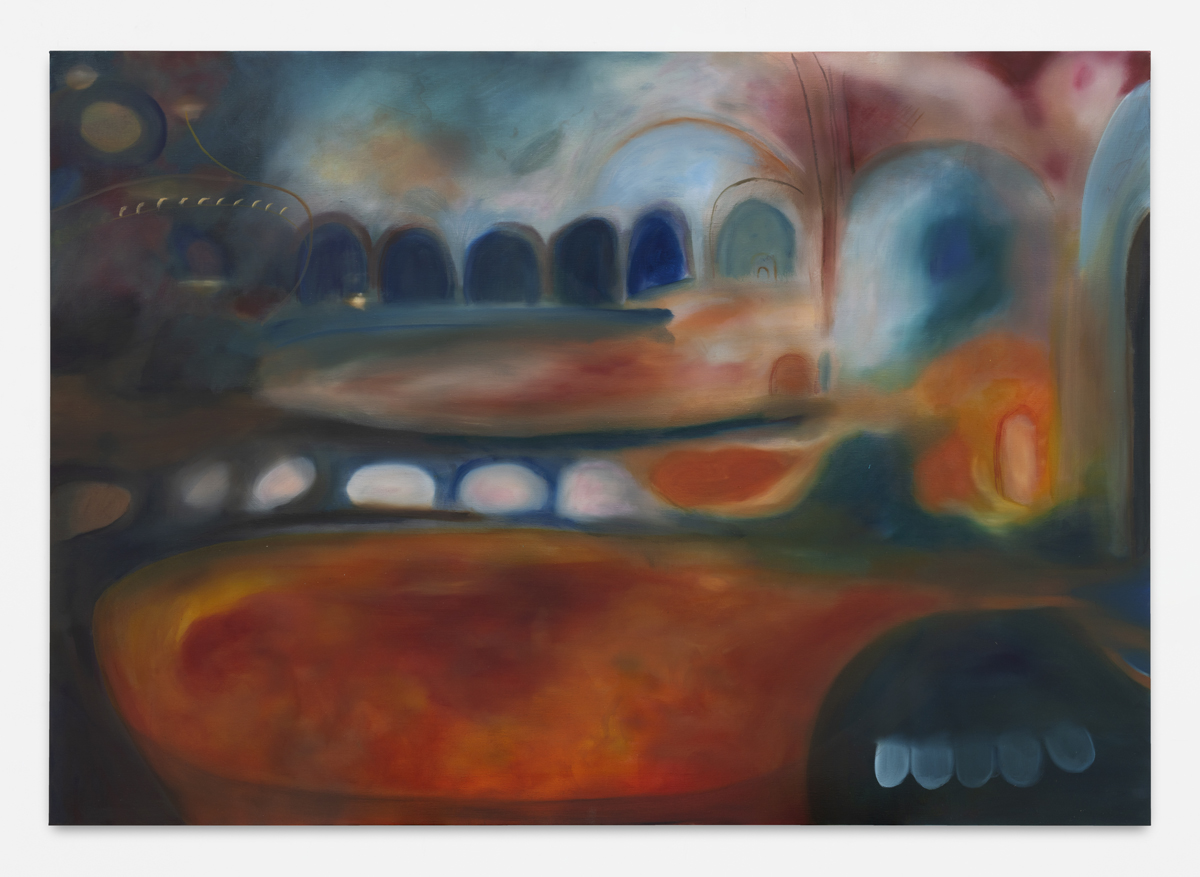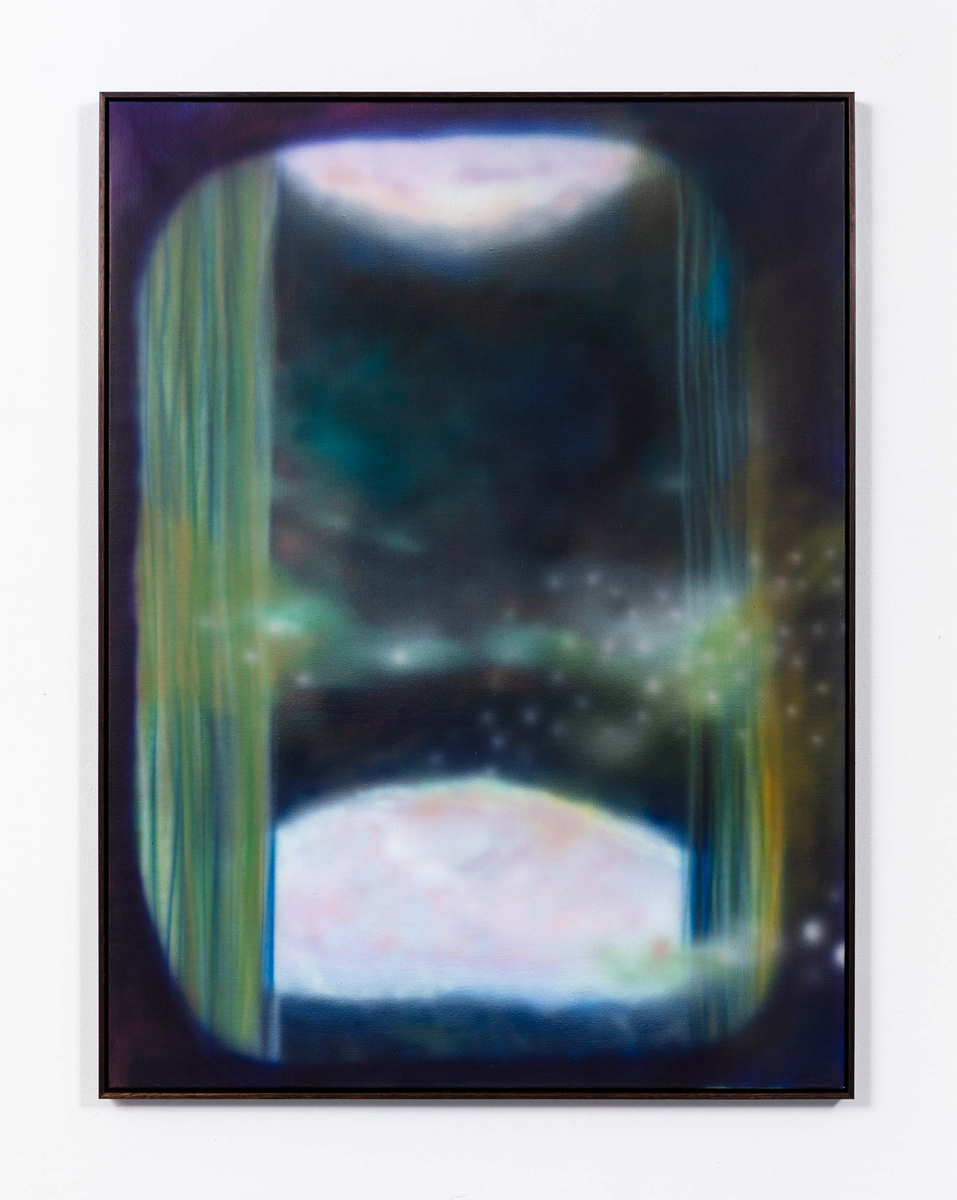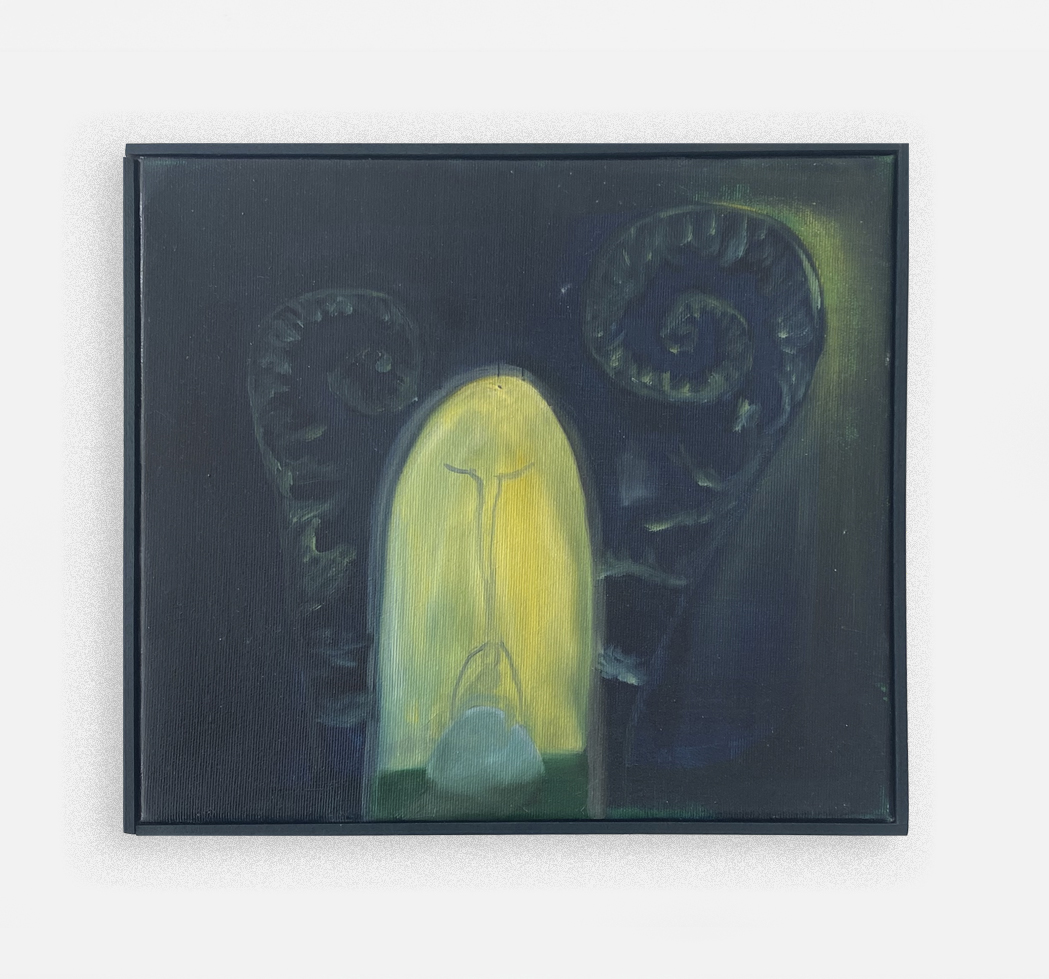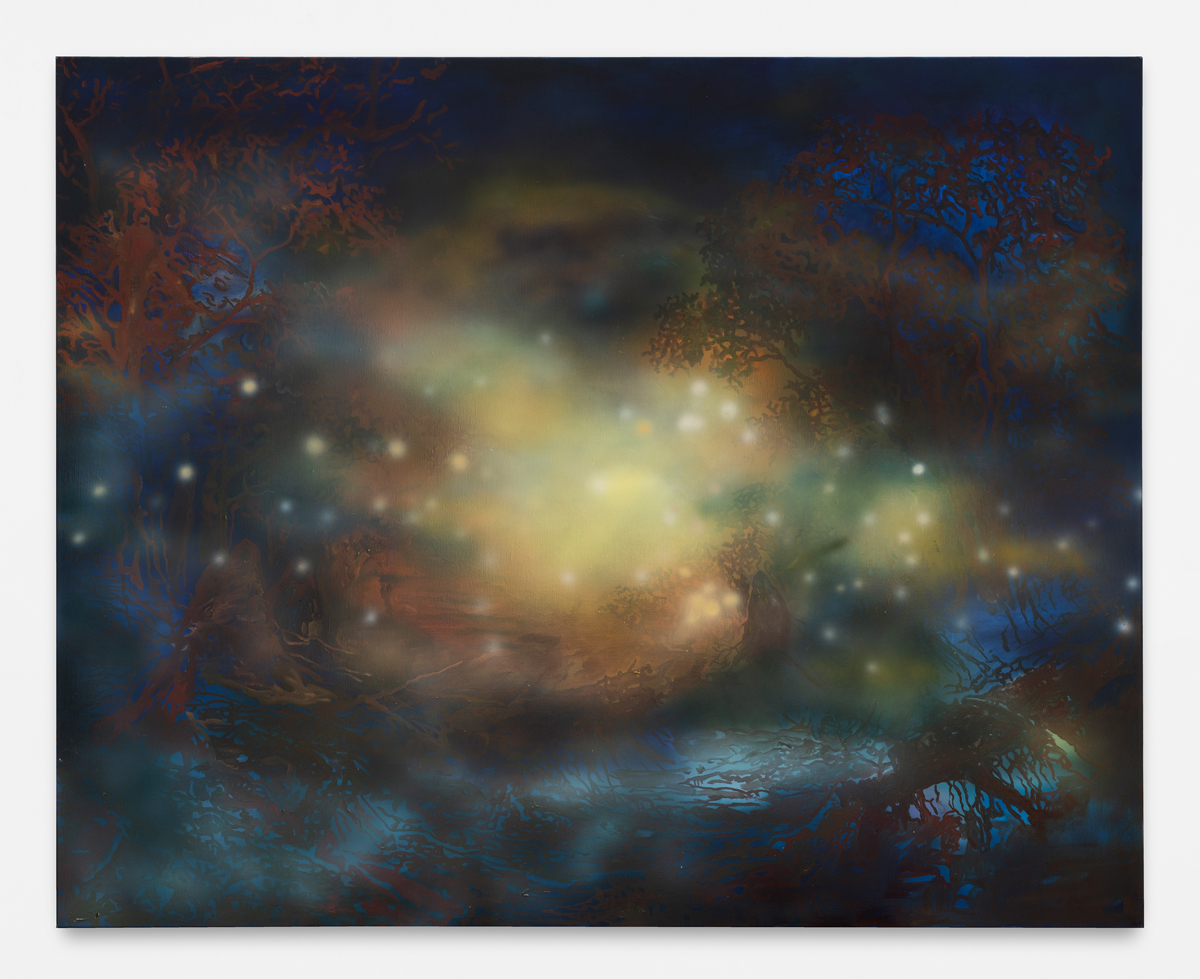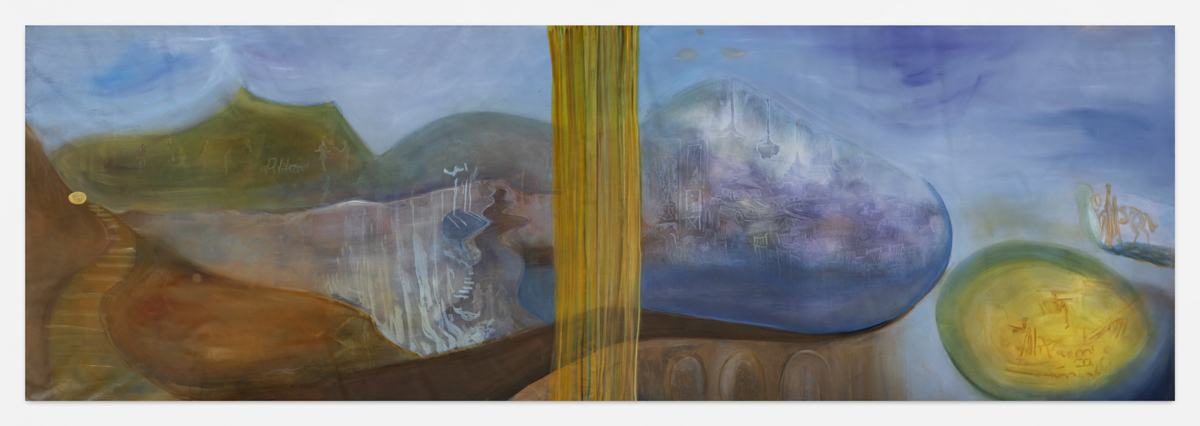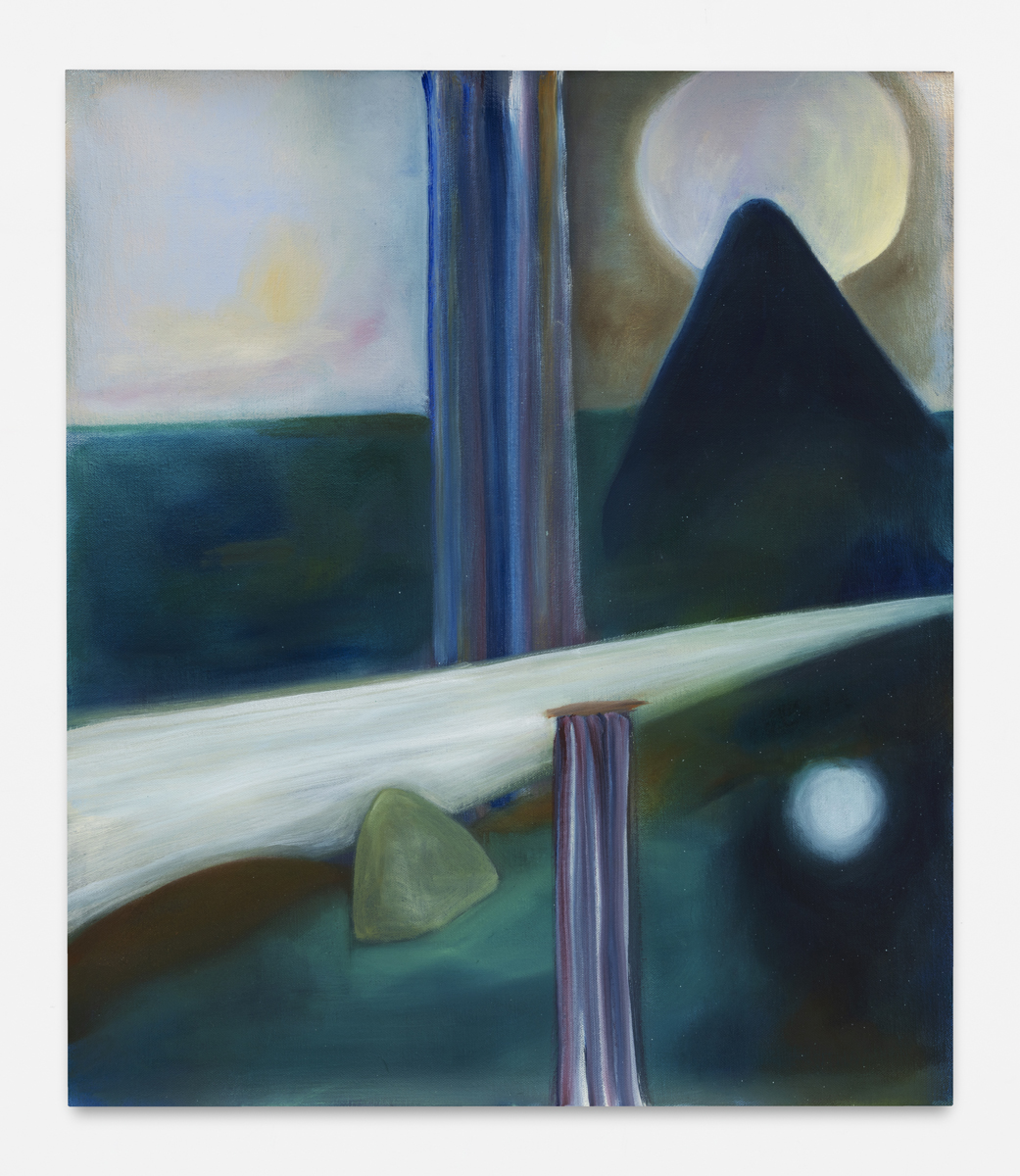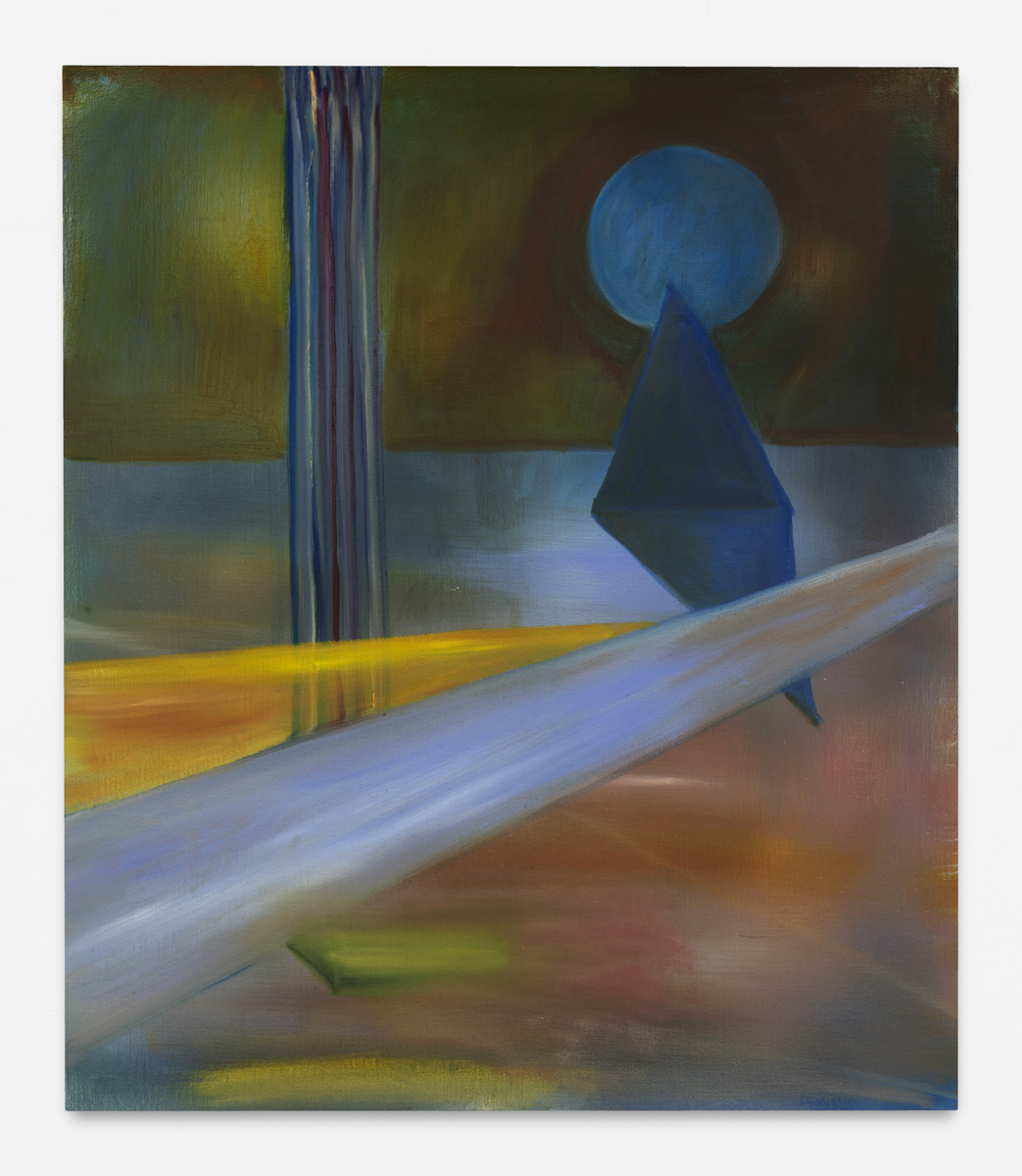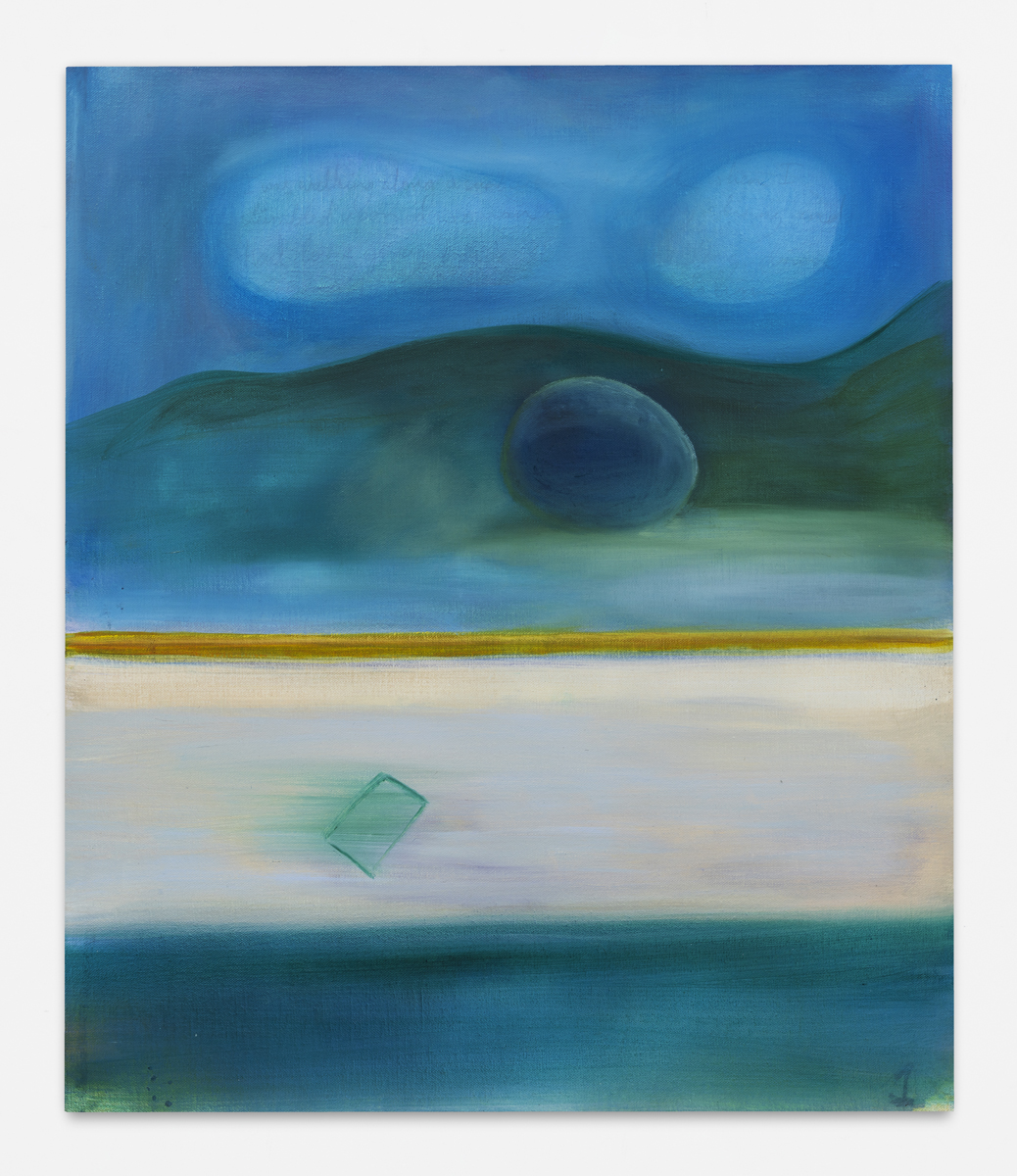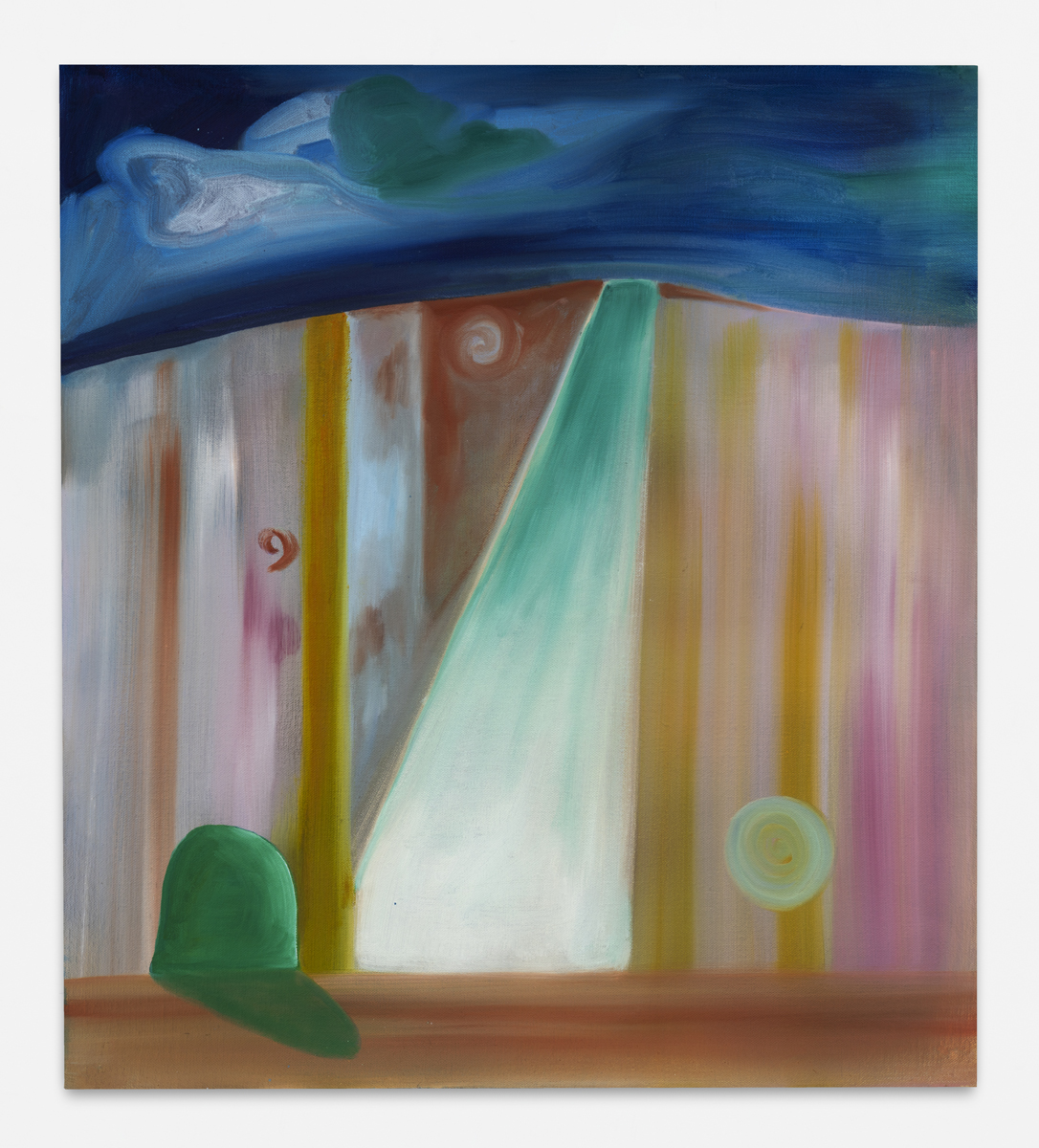
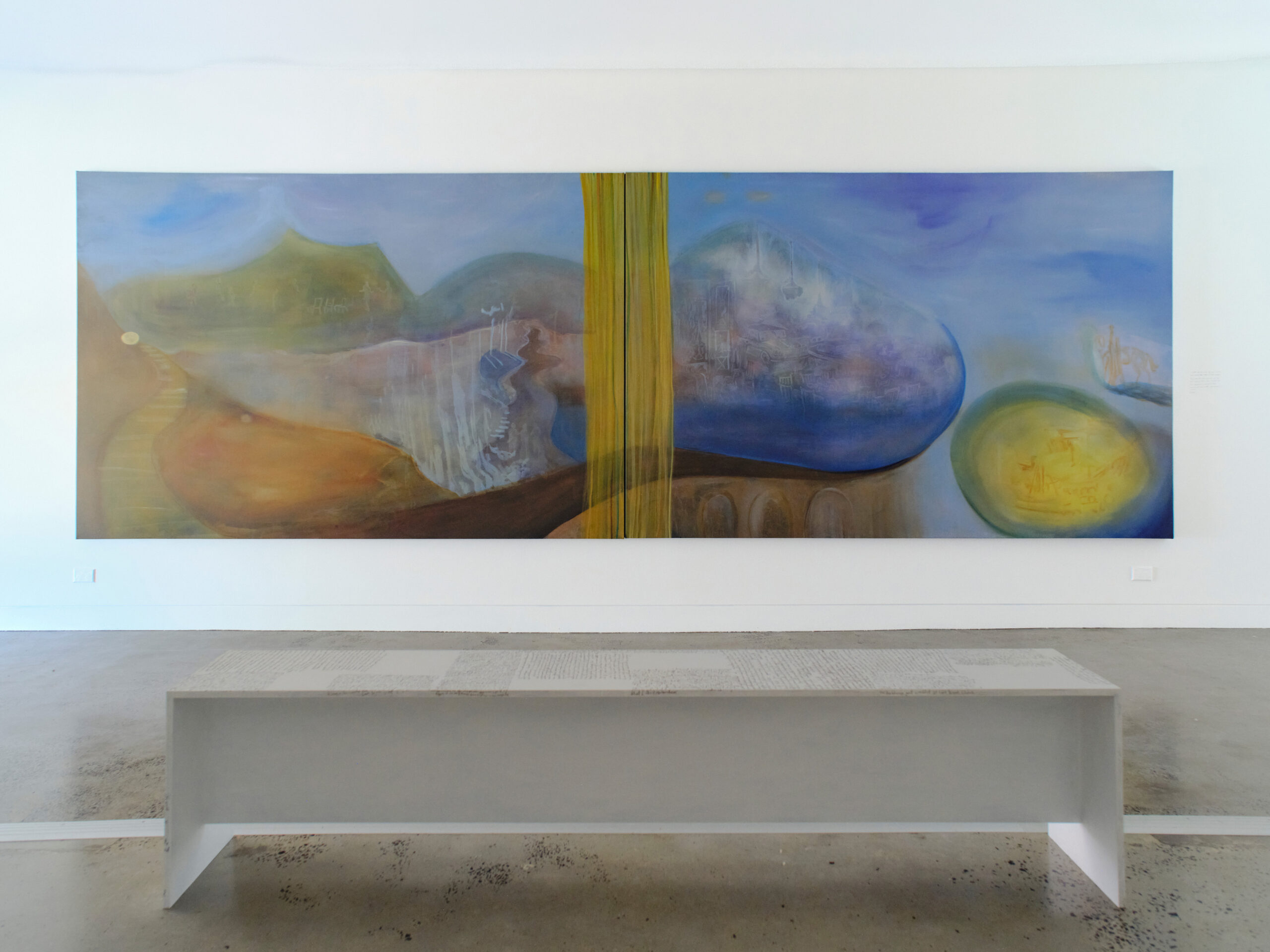
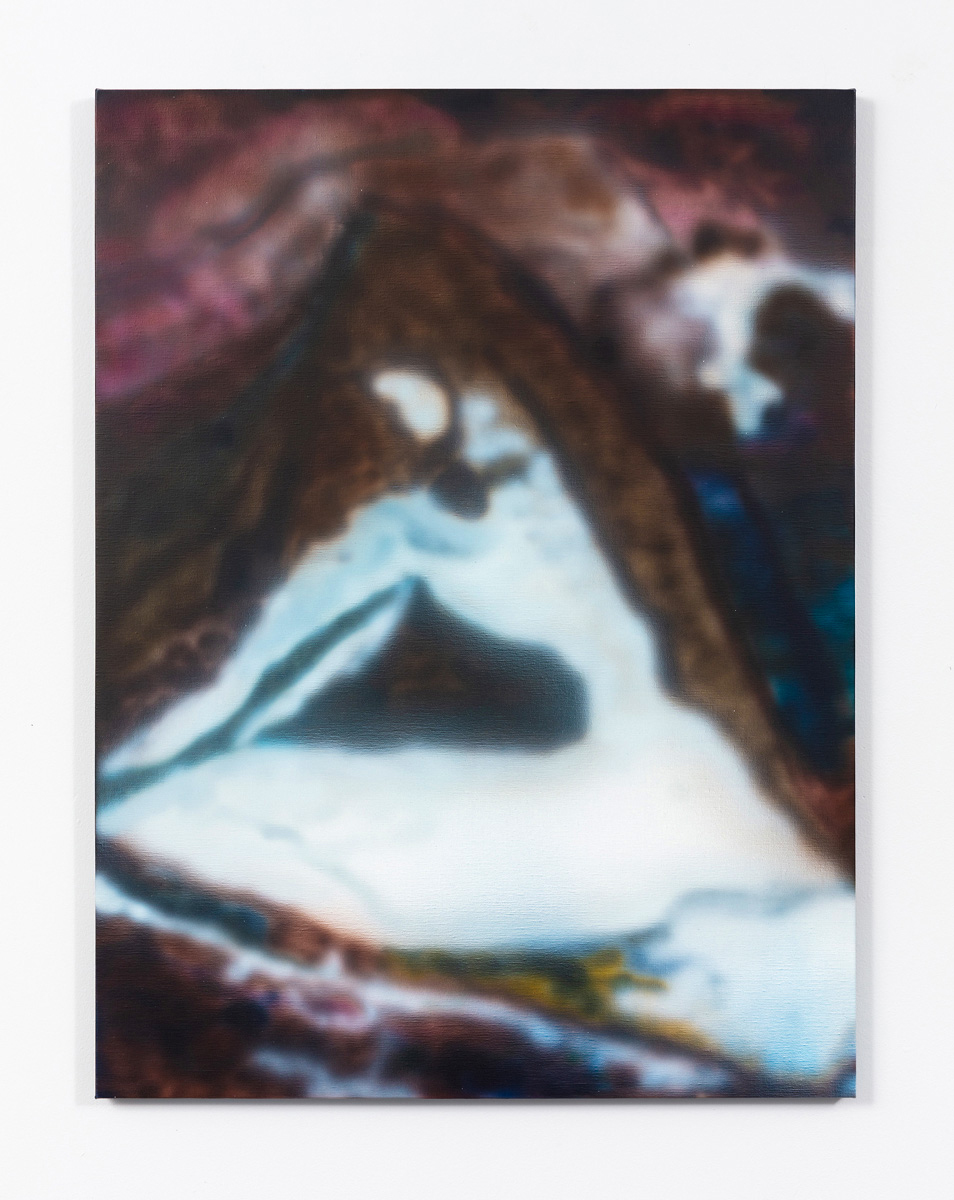
Babette’s dreamscapes are ethereal and earthly. They are interiors and exteriors. They are then and now and in-between. They are stylistically slippery, aesthetically hazy, subjectively porous. Forms that resonate with familiarity are stubbornly ambiguous. Obscured details require patient, forensic examination. The explicit dream symbolism and crisp illusionism associated with surrealist painters such as Magritte or Dali is completely ignored. In reality, dreams are more sensation than a film projected onto the back of one’s eyelids. Anyone who has dreamt of falling knows this intuitively, and yet dream spaces hold qualities that seem intrinsic. In “…the space of our dreams”, Foucault writes, “…there is a light, ethereal, transparent space, or again a dark, rough, encumbered space; a space from above, of summits, or on the contrary a space from below, of mud; or again a space that can be flowing like sparkling water, or a space that is fixed, congealed, like stone or crystal.”[i]
Recurring motifs in Babette’s dreams include waterfalls, caves, and carparks. These are cool, damp places full of shadows, and sometimes foreboding. The surrealists often cited caves and labyrinths as a reminder of the importance of myth and primitive instinct. Babette paints the atmospheres of these dreams at human scale, in portrait format, rather than landscape. The effect is immersive and the address is intimate. Waterfalls, caves, and carparks all evoke the vertical axes of terrestrial space, echoing Freud’s renowned iceberg model of the mind, as well as the passage of dream, from the dark recesses of the unconscious to waking life. For Babette, who is living in the slippage between Australia and France, and dream and waking life, the waterfall, which unifies two distinct planes through the language of water, is a particularly poignant emblem.